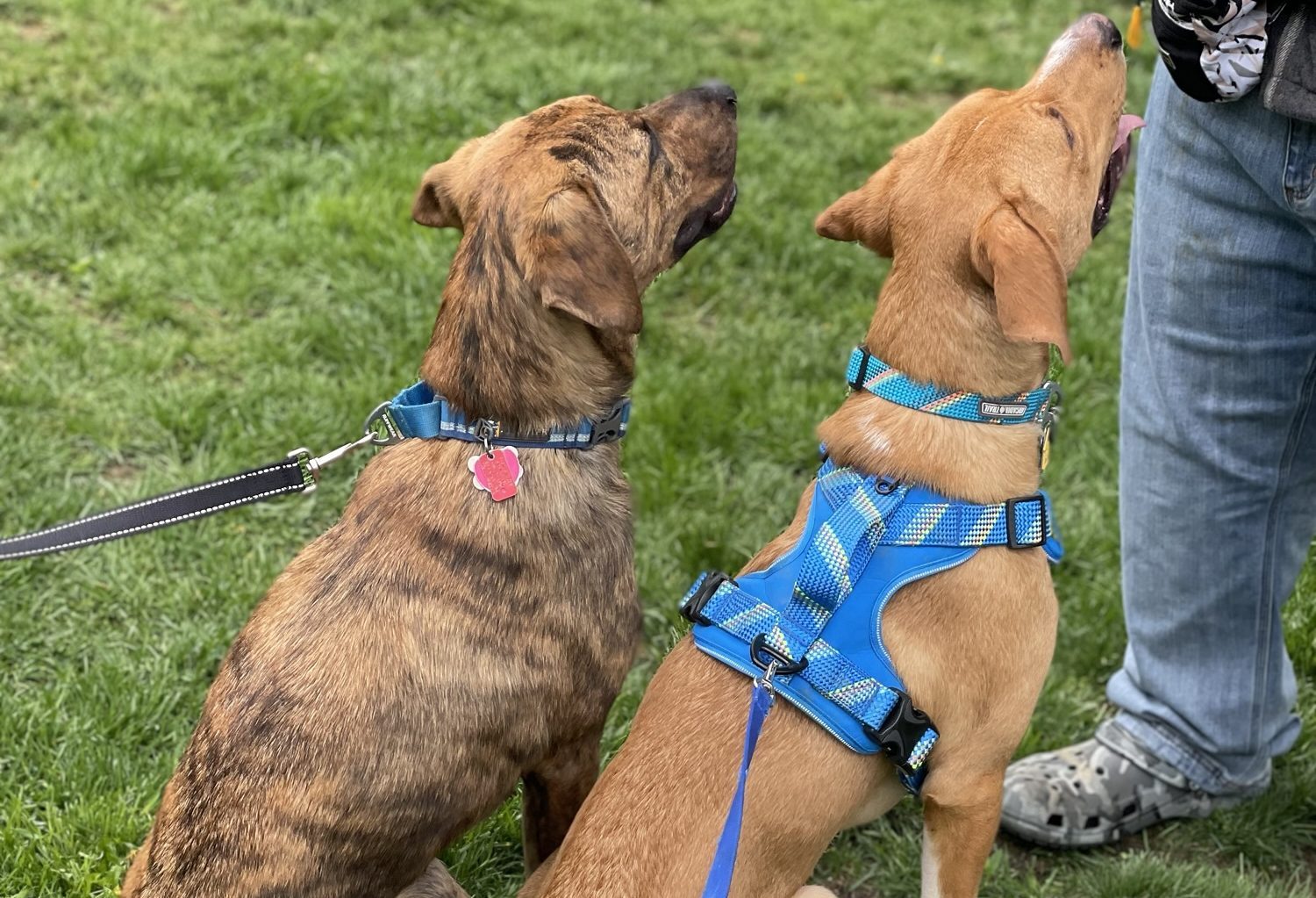
We’ve all been there – you’re walking your dog at the park and see another pup quickly approaching. You might become anxious at how this introduction is going go. Will everyone get along or is this going to become a stressful situation? It is important to have a plan of how to introduce dogs to each other before you find yourself in this situation. This is important to reduce your dog’s stress, prevent fights, and set your dog up for a successful friendship. Follow along to see our strategies on how to handle these situations.
Preparation for Introductions
Knowing your dog’s personality and likes/dislikes will help you prepare for how to introduce dogs to each other. Dogs have different personalities just like people do, so some dogs will be more introverted or extroverted than others. Does your dog tend to be reactive? It is important to know these things before trying to make introductions with other dogs. While you can’t control the other dog, at least you will be able to help your dog make the introduction with the knowledge of how your dog acts.
If you are making plans ahead of time for introductions, plan a neutral territory for the dogs to meet. It is best to avoid either of the dogs’ homes, as dogs can become territorial in their own homes. Consider a park or walking trail for the dogs to meet. Be sure to have the dogs on their leashes at least initially during this process. Do not use retractable leashes, as these can be hazardous to all involved.
Have appropriate equipment including a study leash and collar or harness. Have a backup plan in case something goes wrong. This might include having some type of physical barrier ready in case you need to separate the dogs quickly. Breaking up a dog fight is an incredibly dangerous and difficult thing to do once a fight breaks out, so being prepared to stop this before it even starts is the best way to go.
The Introduction Process

Once you’re ready to have your dog meet another dog, plan to walk both dogs at a distance to where they can see each other but not actually meet yet. This will allow the dogs to become aware of each other before they are at a distance where they can actually reach each other. As the dogs become calmer, slowly shorten the distance between them. Watch their body language. If either dog becomes aggressive or distressed, back the dogs away from each other. If the dogs are able to reach each other successfully, allow them to sniff briefly. Some dogs may try to sniff very aggressively, so keep this interaction brief at first. Be prepared to separate the dogs quickly if any negative body language is shown.
If this is success and you have a fenced in area, you can allow the dogs to have some off leash interactions in a secure area. Do not leave the dogs alone and again be prepared to leash and separate the dogs quickly if any tensions arise.
How NOT to introduce dogs to each other

- Avoid forcing interactions – if one of the dogs is showing signs of distress or agitation, do not continue to force this interaction
- No face to face interactions to begin with – let the dogs sniff each other from behind at first until they become comfortable with each other
- Avoid crowded areas – this can cause more stress for your dog if there is already a lot of chaos and triggers around them when making a new introduction
- No punishing dogs during interactions – use positive reinforcement instead to avoid making this interaction more stressful than it needs to be
Common Issues with Introductions
- Allowing off-leash too soon – be sure that the dogs are comfortable with each other before allowing them off leash
- One of the dogs becomes nervous/anxious – increase the distance between the dogs and slowly retry the introduction process from the beginning
- The dogs don’t get along – as much as you might want the dogs to become friends, some dogs just might not like each other and that is okay. Don’t force the interaction. You can try again later if the dogs seem comfortable doing so.
Bringing a New Dog into Your Home
If you’re adopting a new puppy, you’ll need to have a game plan to introduce your current dog to their new sibling. If you can do this outside first, that is ideal using the above introduction techniques. Once you do the outdoor introductions or if that is not an option, plan for indoor introductions. Still have both dogs on their leashes so you have control. Allow them to get closer to each other as they become calmer. Put away toys, bones, and any food at first so they don’t become territorial over these items. Plan for supervised play for a while until you know the dogs are comfortable with each other. Watch for signs of aggression and separate the dogs for a few days if this occurs. It may take a few weeks for them to become comfortable with each other, so be patient and understanding as this can be a stressful time for them.
Having dog friends is a great way to keep your dog socialized and happy! Once you learn how to properly introduce dogs to each other, your dog will then have a buddy to play with and go on adventures with for years to come!
Does your dog have a best friend? Share their introduction story in the comments below!






Leave a Reply